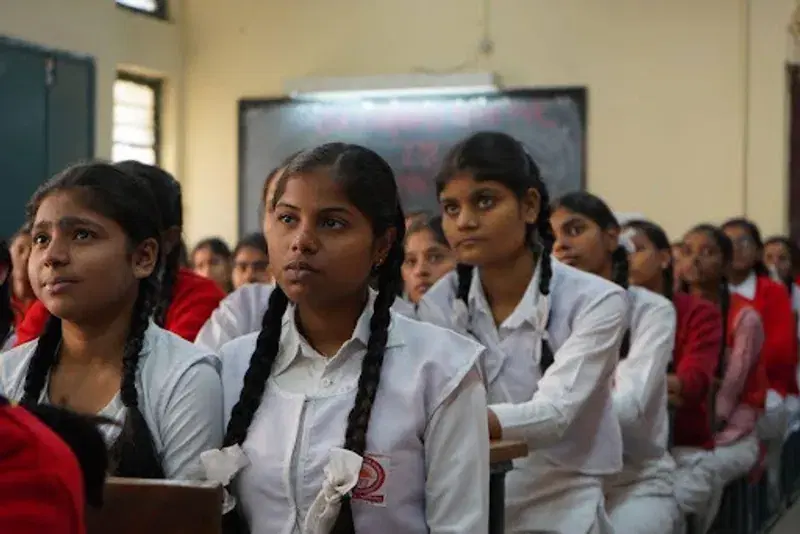
If your child's school has started asking about a "third language" and you're not sure what's actually required, why it's changing, or whether English even counts, you're not alone: this has become a genuine point of confusion for parents across CBSE schools. The confusion isn't just administrative either; it's currently in front of the Supreme Court, which has raised a striking question of its own: can English really be treated as a foreign language in India anymore? Here's what the policy actually says, and where things stand.
What Does the Three-Language Policy Actually Require?
Under the current CBSE framework, students are required to study three languages, with at least two of them being "Bhartiya Bhashas": Indian languages. A non-native language, most commonly English, can be studied as the third language, provided the other two are Indian languages. CBSE has also introduced transitional relaxations for certain students to ease the shift. The policy itself is tied to the language provisions in the National Education Policy (NEP) 2020 and the National Curriculum Framework, both of which emphasis multilingual education rooted in Indian languages.
In practice, this has raised real questions for families: What happens if a student has been studying English and only one Indian language for years? What if English is already the primary medium of instruction at their school? And what choice, if any, do students actually get in picking their third language?
Why Did the Supreme Court Ask About English?
While hearing challenges to how this policy is being implemented, the Supreme Court raised a pointed question in 2026: could English be considered an indigenous Indian language? It's important to be precise about what happened here. The Court did not rule that English is an Indian language. It raised the question while examining the broader legal and policy framework around the three-language rule.
The question matters because English occupies an unusual position in India. It may not fit the conventional constitutional or linguistic classification of an "Indian language," but it's deeply embedded in Indian life: used extensively in higher education, courts, business, technology, government, and professional communication, and spoken by millions of Indians as a first, second, or additional language. The Court's question points to something bigger than a school curriculum debate: can a language's historical origin alone determine its legal and practical classification today?
The Real Debate: Choice Versus Compulsion
There are genuine arguments on both sides here, and it's worth understanding them rather than picking a side reflexively. Promoting Indian languages helps preserve cultural heritage, strengthens regional identity, and improves access to education for students more comfortable learning in a familiar language. At the same time, English continues to be a practical gateway, to higher education, international employment, technology, and global opportunities that many families are actively planning around. For a lot of Indian students, English isn't just another subject; it's a pathway. The strongest version of this policy probably isn't one that forces a choice between the two, but one that lets students become genuinely multilingual: competitive globally while staying rooted in an Indian language.
Did the Court Say Schools Should Prefer English?
No, and this is worth being clear about, since it's easy to misread. The Supreme Court has not said English is superior to Indian languages, or that schools should prioritise it over regional languages. If anything, the Court has indicated that learning Indian languages serves an important constitutional and cultural purpose, and separately observed that learning any language is never wasted effort. The real question before the Court isn't "English versus Indian languages". It's about finding the right balance between the two, especially in how the policy gets implemented on the ground.
Where Does the Matter Stand Now?
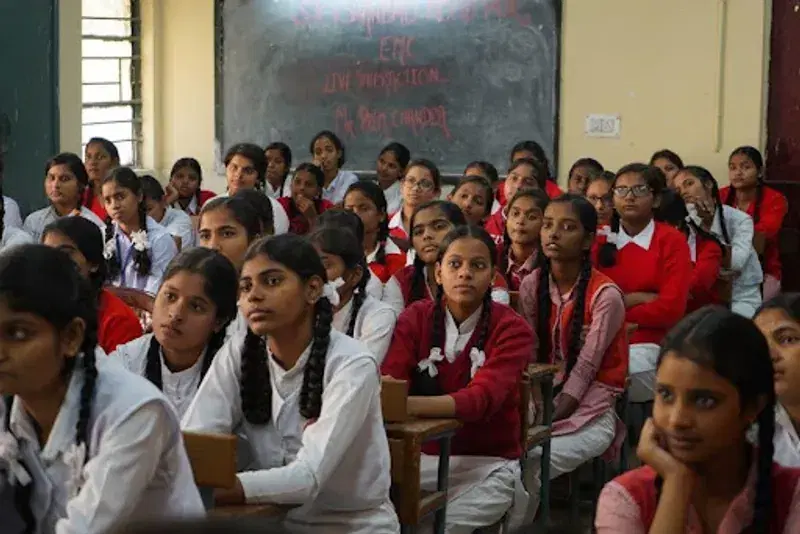
As of now, the Supreme Court has not issued a final ruling declaring English an indigenous Indian language, and the broader legal question remains open. CBSE has continued to defend the three-language framework while issuing clarifications and transitional measures for schools navigating the shift. For parents, that means the practical requirements can vary somewhat by school and by how far along the transition your child's school is, which is exactly why checking directly with the school, rather than relying on assumptions, matters right now.
What to Do Next

Check your child's specific school policy on which languages currently count toward the three-language requirement, since implementation varies while the framework is still being clarified.
Ask about transitional relaxations if your child has already been studying a fixed set of languages for several years: CBSE has allowed some flexibility here.
Don't assume English is being removed or downgraded: the ongoing legal debate is about classification and balance, not about excluding English from education.
Keep an eye on CBSE circulars and Supreme Court updates if this affects an upcoming academic year for your child, since the framework may still be refined.
Raise concerns in writing with the school administration if you believe the three-language requirement is being applied unfairly or without the transitional options CBSE has provided.
Disclaimer
This article is general legal information for educational purposes and does not constitute legal advice. The Supreme Court's observations discussed here were made during ongoing proceedings and should not be treated as a final ruling. Please consult your school administration or a qualified professional for guidance specific to your child's situation.